
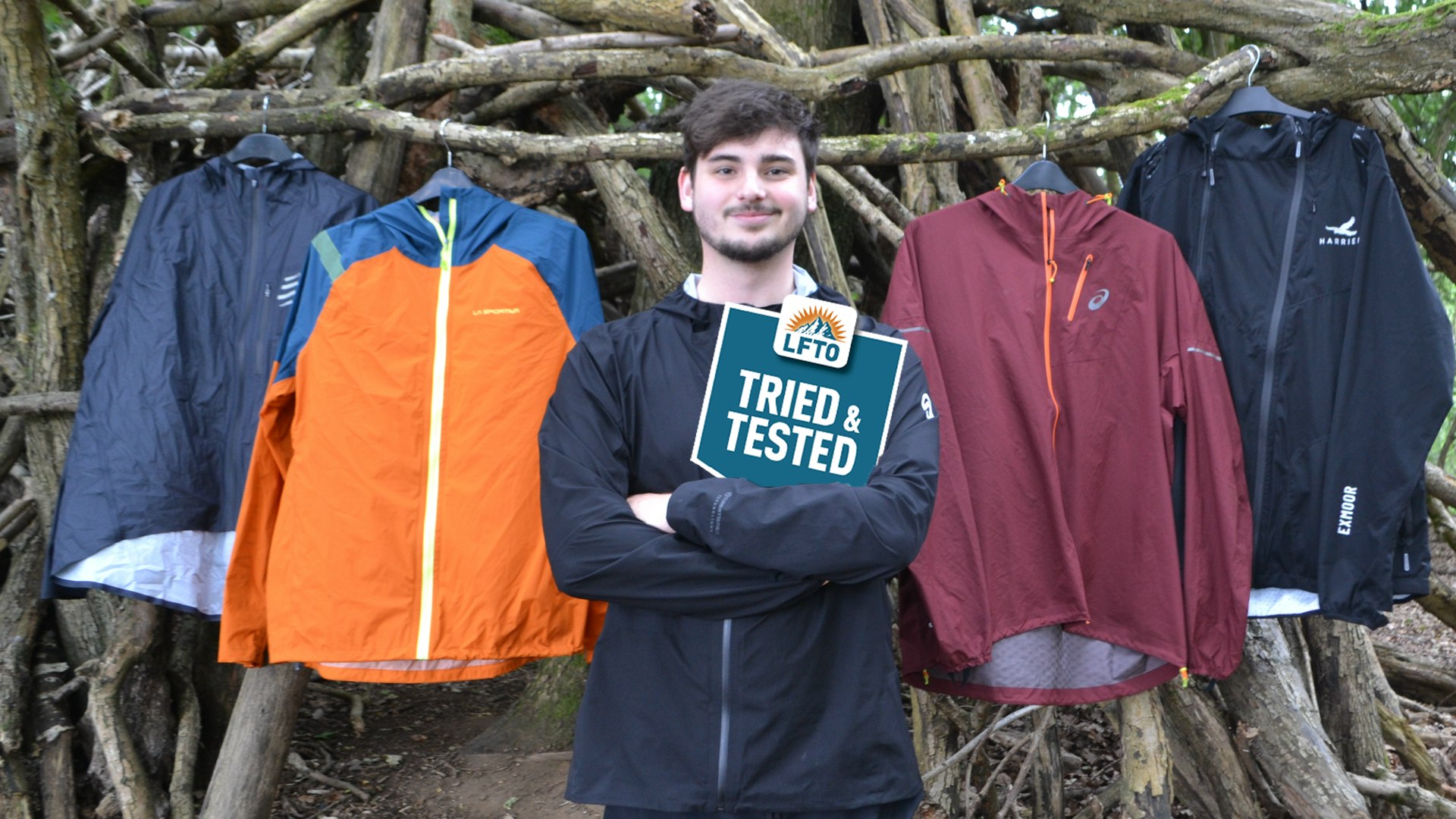
A waterproof trail running jacket should be at the top of your essential kit list – well, maybe under shoes, but only just!
Training in the rain is pretty unavoidable. What you can control is what you wear. Investing in a high-quality waterproof will transform your running experience and keep you exploring the trails all year round.
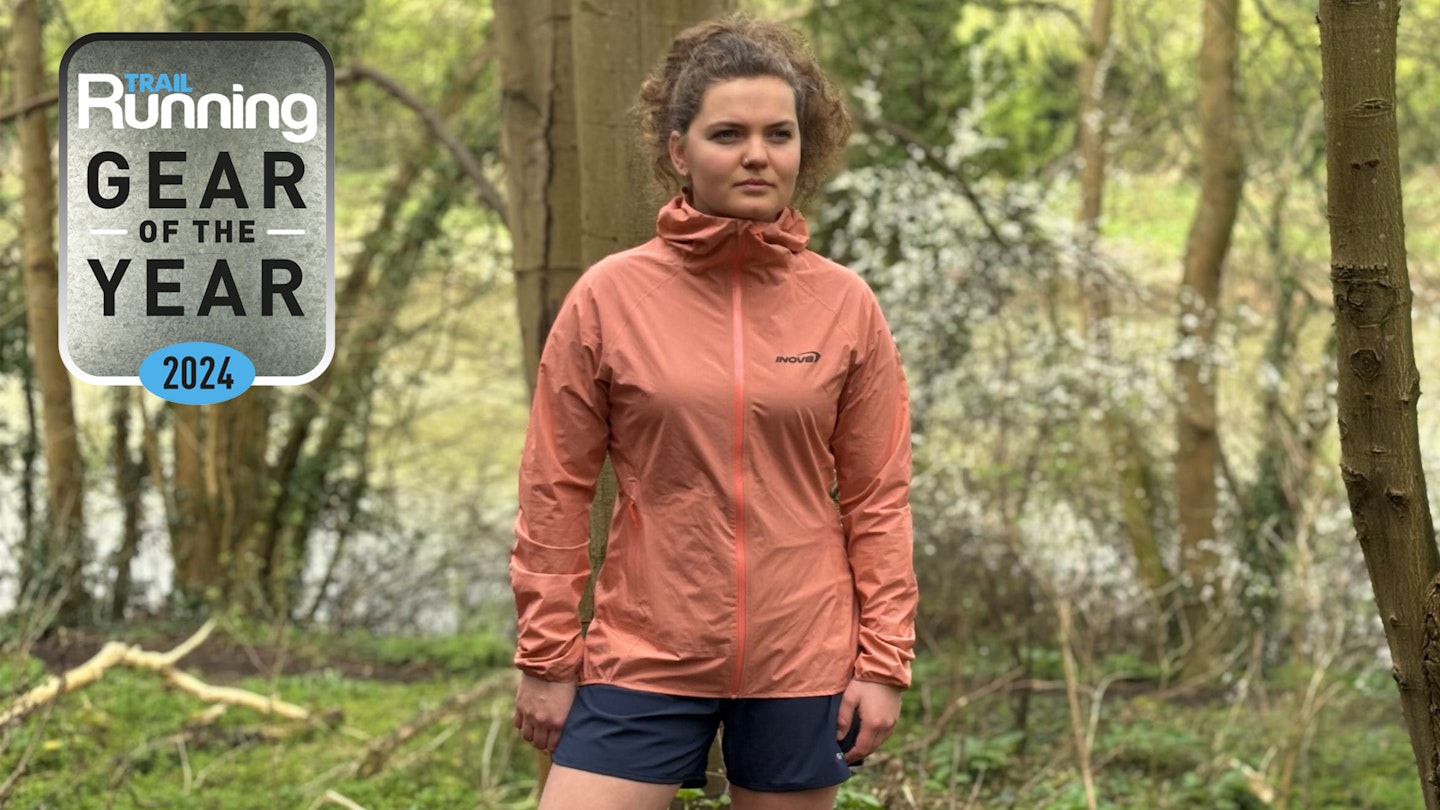
Shortlist: Best waterproof running jackets at a glance
Best in test: Inov8 Stormshell FZ V2
Best value: Kiprun 500
Best for high performance: Compressport Thunderstorm
Best pack-down shell jacket: Rab Phantom Pull-On
How we tested the best waterproof running jackets
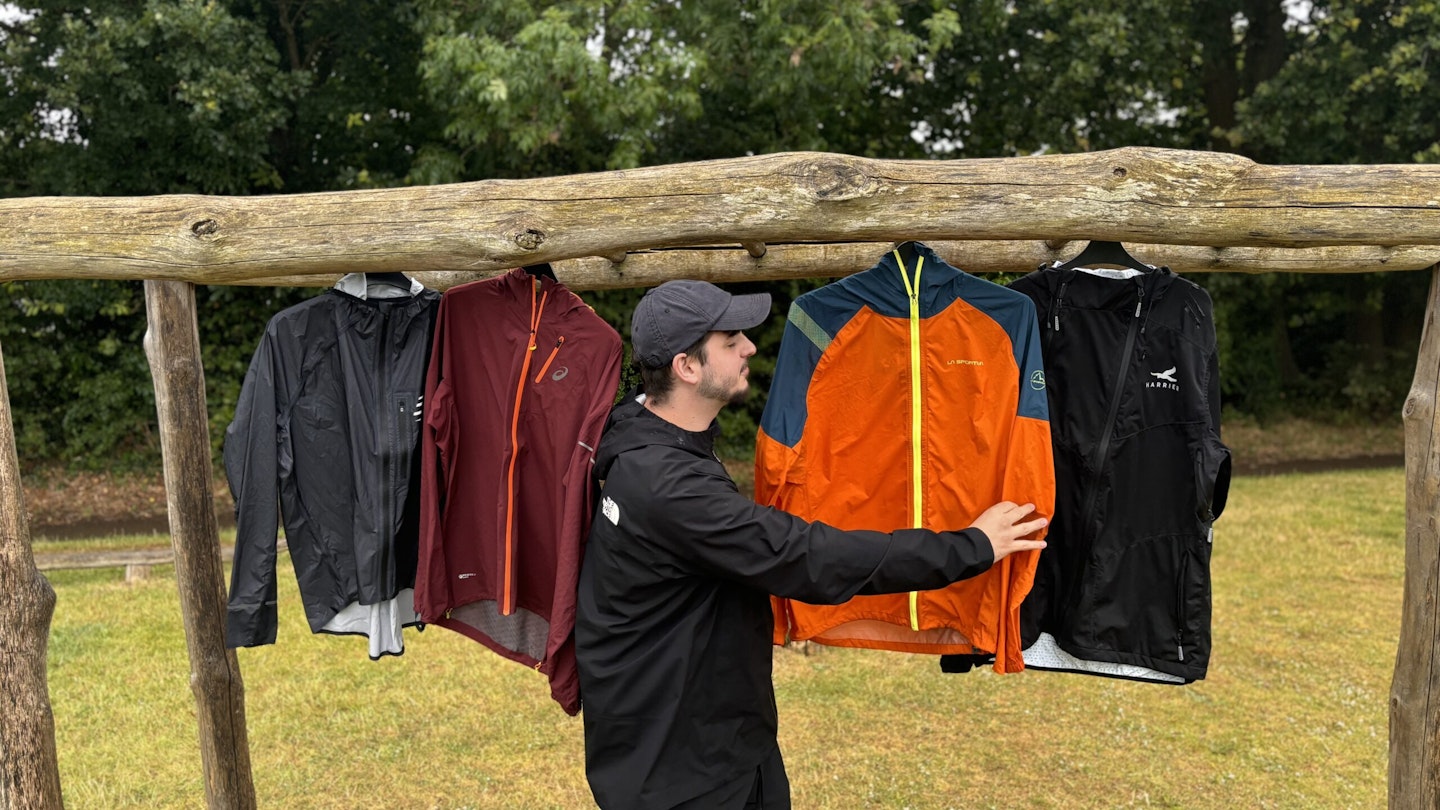
We tried to get a nice image of all the new jackets… ©LFTO
We’ve been testing waterproof jackets year after year, so we know what makes a good one. Naturally, they need to have an excellent waterproof membrane while retaining a good level of breathability and comfort, which is certainly not an easy balance to strike.
We judge waterproof running jackets on a range of criteria, so alongside waterproofing and breathability, we also analyse their weight, range of movement, features and fit. Ultimately, when choosing a waterproof running jacket it needs to be both comfortable and functional.
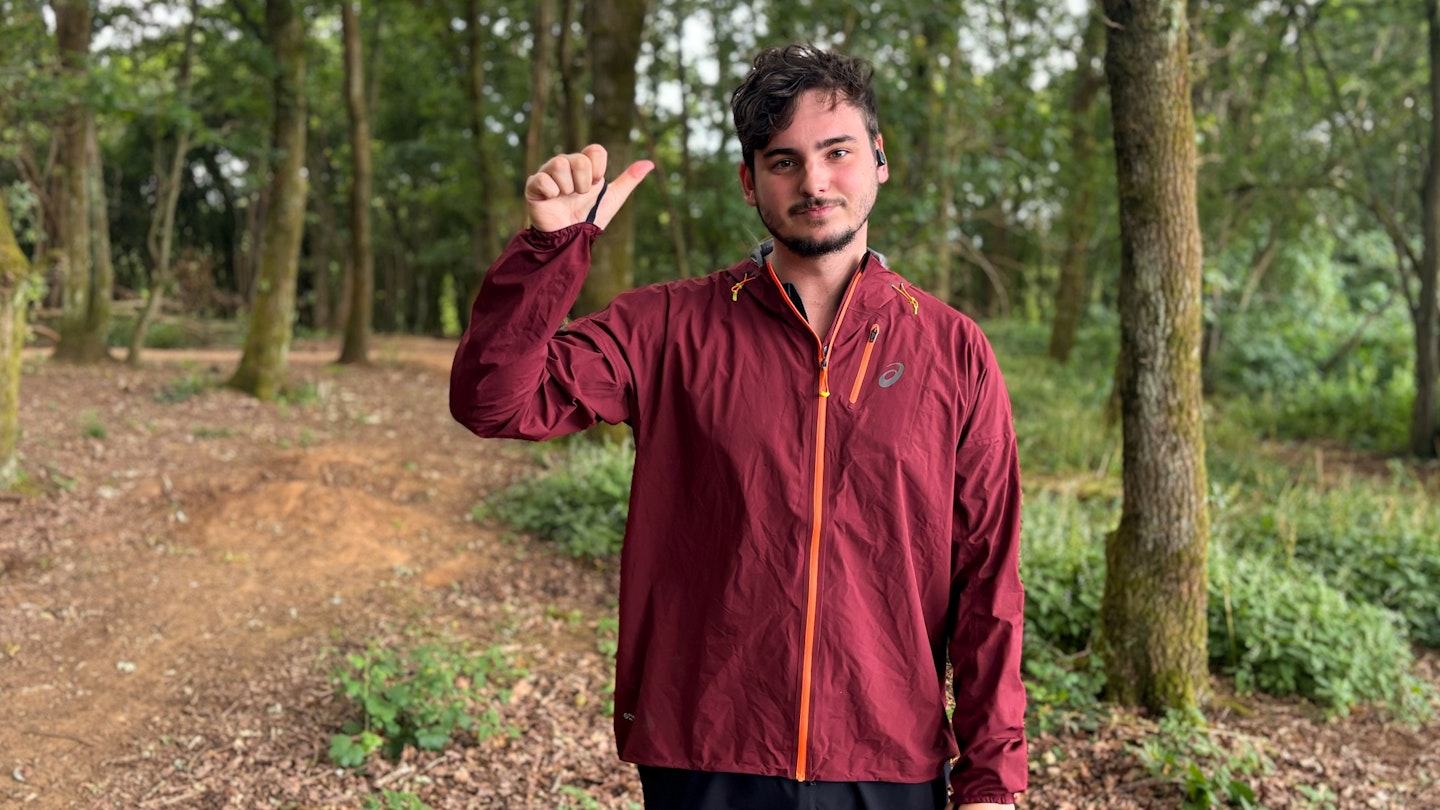
All of our testing takes place in real-world environments, with testers Milo Wilson, Kate Milsom and Lily Canter taking to very soggy trails to put the below options through their paces.
Read more about how we test.
Best waterproof running jackets reviewed:
Best in Test
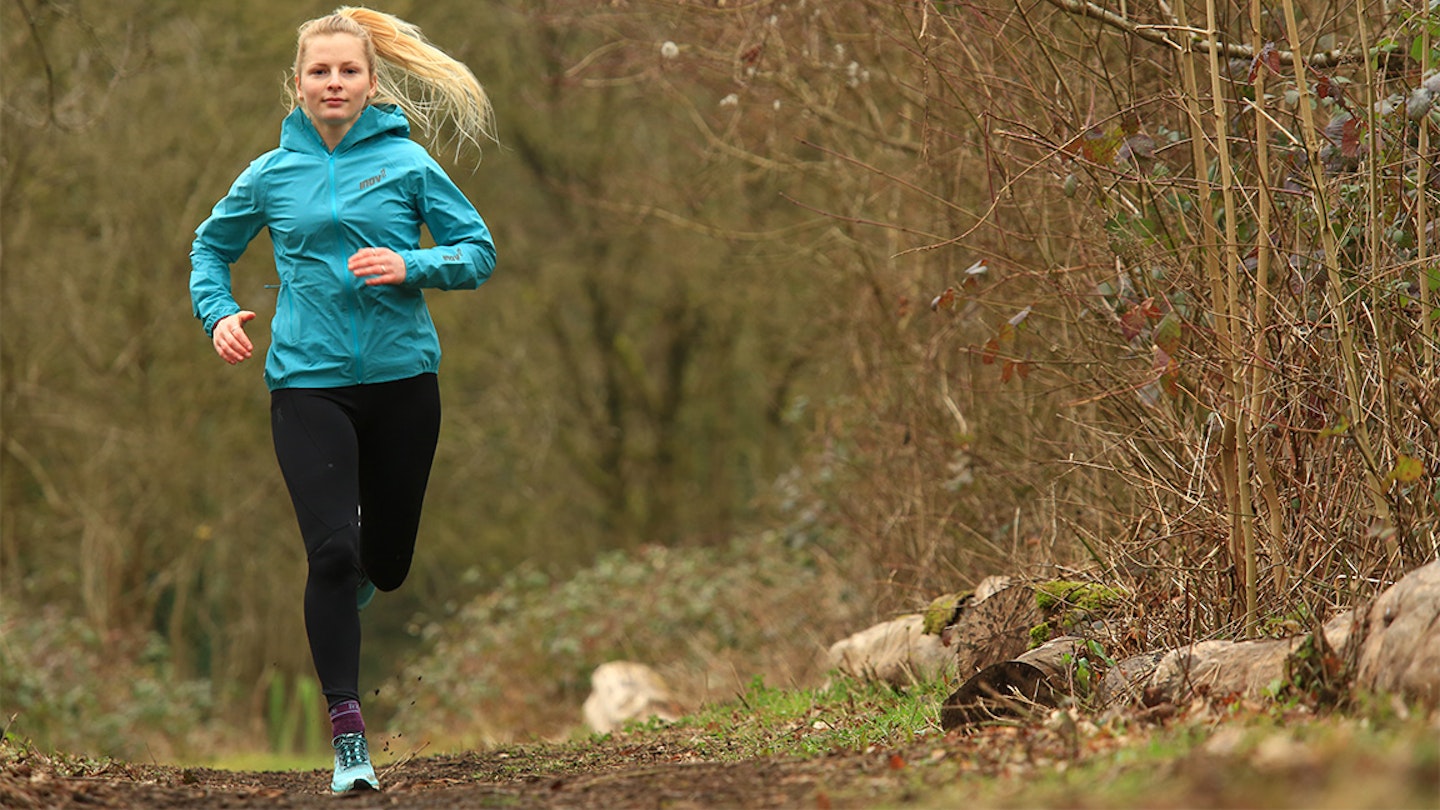
The Inov8 Stormshell is aptly named and delivers on what it promises. Made to cope in the wettest conditions, the Stormshell is a performance-driven layer with a streamlined fit.
The structured hood keeps the rain off and out of the eyes, with a drawstring sinching the sides for adjustability. A high collar and zip create a secure fit, while soft lining inside the zip garage avoids any uncomfortable rubbing.
A light 150g, the Stormshell V2 manages to remain fairly breathable in use, while also offering a high level of waterproofing thanks to the taped seams and waterproof Pertex Shield fabric. If the weather clears up, the one pocket at the front of the jacket can also be used as a stuff sack to pack it away and into a running pack.
Fit is comfortable, offering a slim silhouette without being restrictive. The partly elasticated wrists and hem keep the jacket in place well, though the sleeves seem to fall a little short to make comfortable use of the thumb loops.
Check out the men’s version here
Pros
- Fully waterproof
- Lightweight
- Well-fitting
Cons
- A little pricey
- Only one pocket
| RRP: | £160 |
| Weight: | 150g/5.29oz |
| Pockets? | Yes, 1 chest pocket |
| Waterproofing: | Pertex Shield, 20,000 HH |
| Construction: | 100% Polyamide shell with PU membrane |
| Women’s sizes: | UK6 – UK16 |
| Men’s sizes: | XS – XL |
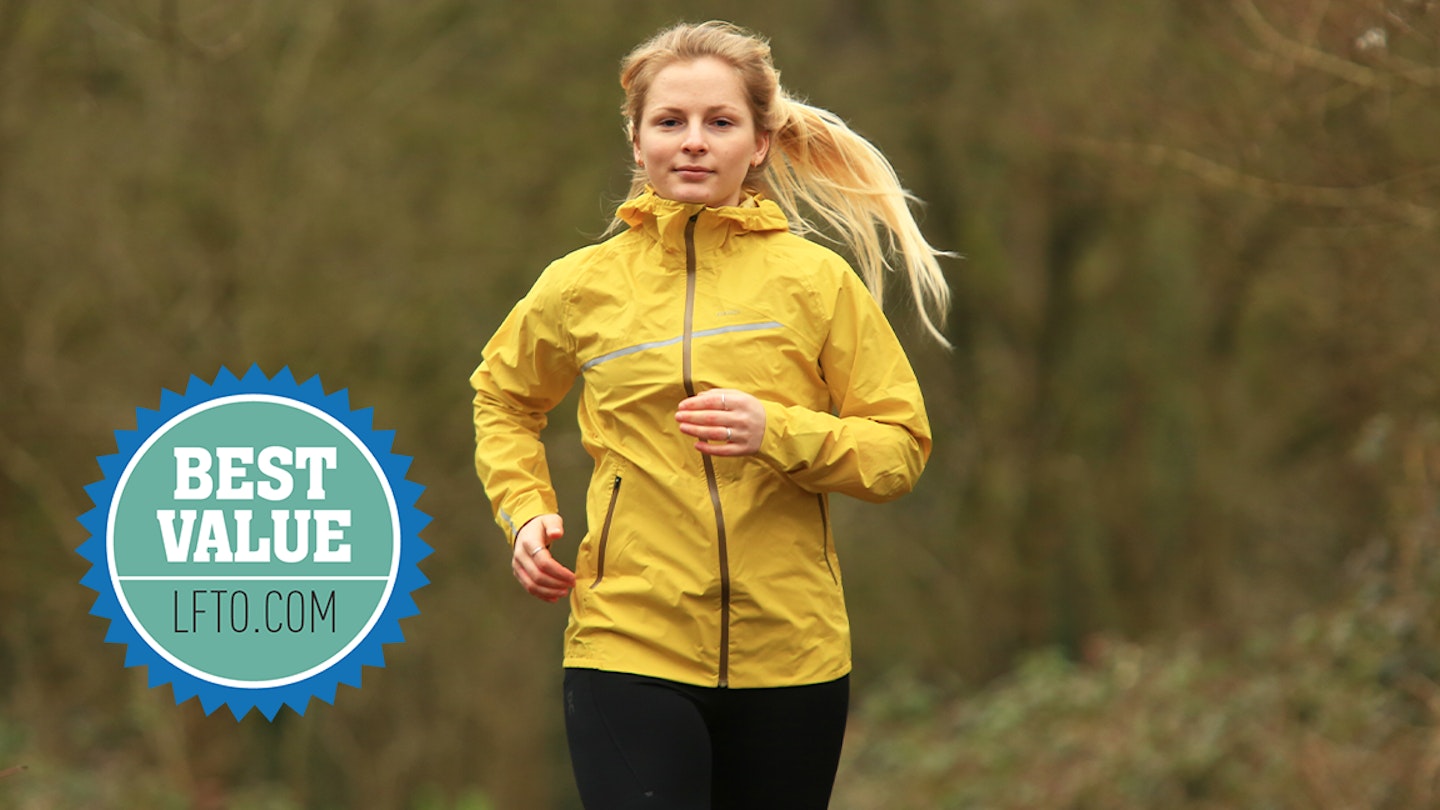
Best Value
The Decathlon Kiprun comes in at the budget end of our selection, yet it has many good features. At first sight, the yellow colourways and reflective stripes make the Kiprun 500 highly visible in poor weather conditions, which is always a big plus in our books for overcast and rainy running.
The Kiprun 500 has hydrostatic head of 10,000mm, which is the minimum you’d expect from a decent waterproof jacket. Taped seams and a taped zip provide weather resilience, but lacks of a full storm flap which might create a vulnerability in extreme conditions.
Though the Kiprun is pitched as a breathable jacket, the lack of ventilation and not so breathable material can trap some perspiration agains the skin, for this reason I’d don this jacket for colder trail runs as Decathlon suggests.
The hood has a peak and a high neck, which offer good protection from the elements. Though the lack of tightening system to the hood feels like an oversight. Moving down to the cuffs, the wrists are semi-elasticated to reduce water ingress and a dipped hem at the back of the jacket offers slight rear protection and stops it riding up when running.
In terms of pocket capacity, there’s two generous pockets on either side, which can be filled with all you need for a shorter run. Included with the shell jacket is a little stuff sack for packing it neatly away when not needed, and stashing in your running pack.
The sizing is generous, making it possible to fit a running pack underneath the shell later. But if you like a slimmer fit, I’d recommend you size down.
Check out the men’s version here
Pros
- Good value for money
- Decent waterproofing
Cons
- Lack of breathability or air vents
- No storm flap at zip
| RRP: | £34.99 |
| Men’s sizes: | S – XXL |
| Women’s sizes: | UK6 – UK14 |
| Waterproofing: | 10,000 HH |
| Construction: | 2.5-layer with membrane |
| Weight: | 195g/6.88oz |
Best for high performance
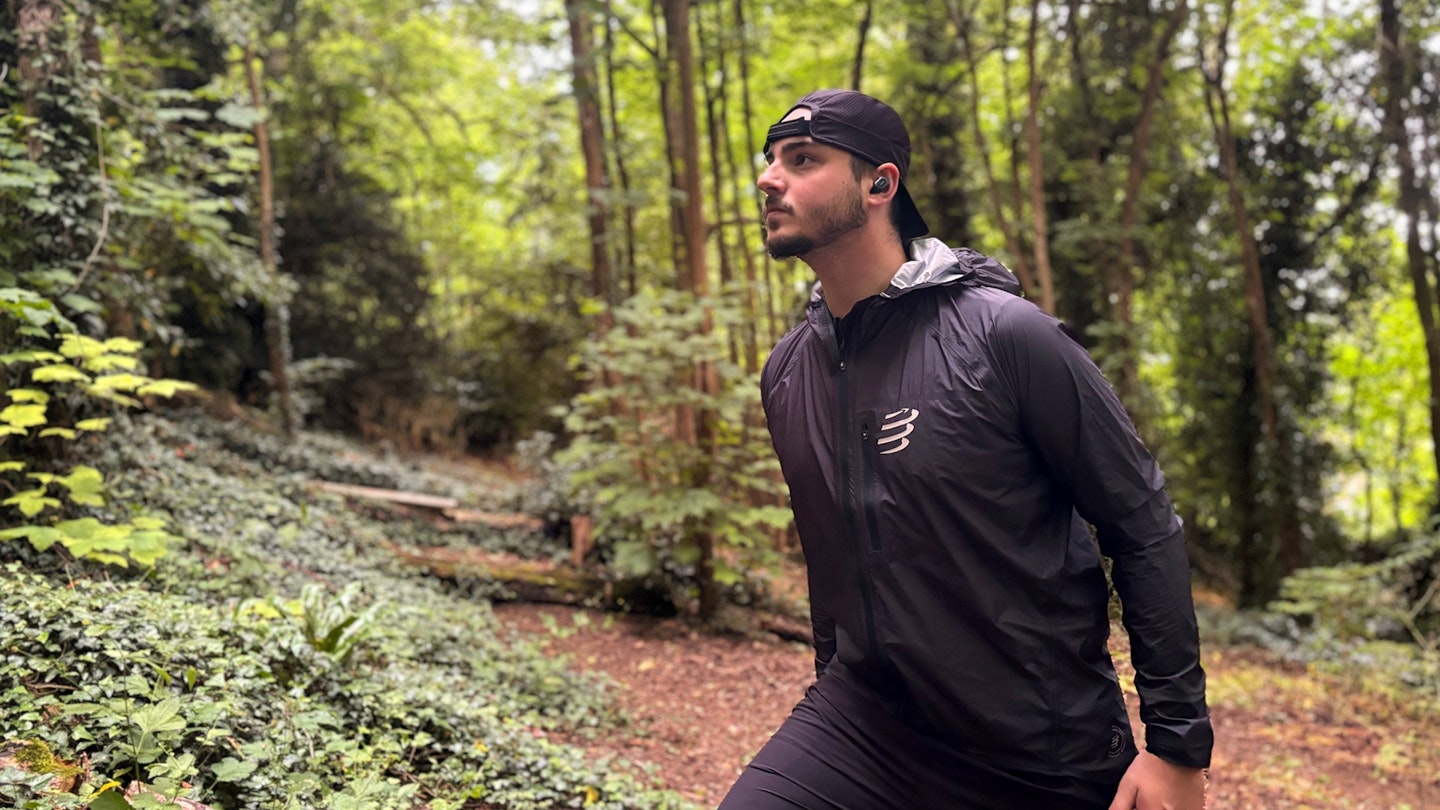
The Compressport Thunderstorm is a pricey but impressive ultra-light waterproof jacket for dedicated runners. Weighing a mere 126g, it’s engineered with high-end materials, boasting a 25,000mm waterproof rating that stood up to heavy downpours in our testing. The slim, athletic fit might not suit everyone, but we found it eliminated any wind drag, making it feel like a second skin on longer runs.
This jacket doesn’t feature any adjustable cuffs or hood toggles; instead, Compressport has opted for elasticated bands that stayed firmly in place without fuss. And despite its minimalist design, the Thunderstorm excelled in breathability, with a 75,000g/m² rating that kept us cool even on intense runs.
We didn’t experience the clamminess that’s common with other waterproofs, which speaks to the fabric’s high performance.
However, the Thunderstorm isn’t without its drawbacks. It’s a snug fit, particularly around the chest and hips, so consider sizing up if you prefer a bit more room or plan on layering. Sustainability is also a letdown at this price point; while durable, it lacks eco-friendly credentials like recycled materials.
Overall, the Thunderstorm is a specialist jacket for those willing to invest in premium waterproof protection with unmatched breathability. It may not be for everyone, but if you’re after top-tier performance in a featherlight package, it’s worth the splurge.
Read our full Compressport Thunderstorn 25/75 review
Pros
- Excellent weather protection
- Precise fit is surprisingly unrestrictive
- Unmatched breathability
- Super lightweight
Cons
- Athletic cut won’t suit everyone
- Hood and cuffs aren’t adjustable
| RRP: | £300 / $420 |
| Breathability: | 75,000g/m² |
| Weight: | 126g / 4.4 oz |
| Waterproofing: | 25,000g/m² |
| Construction: | 100% nylon |
| Unisex sizes: | XS–XL |
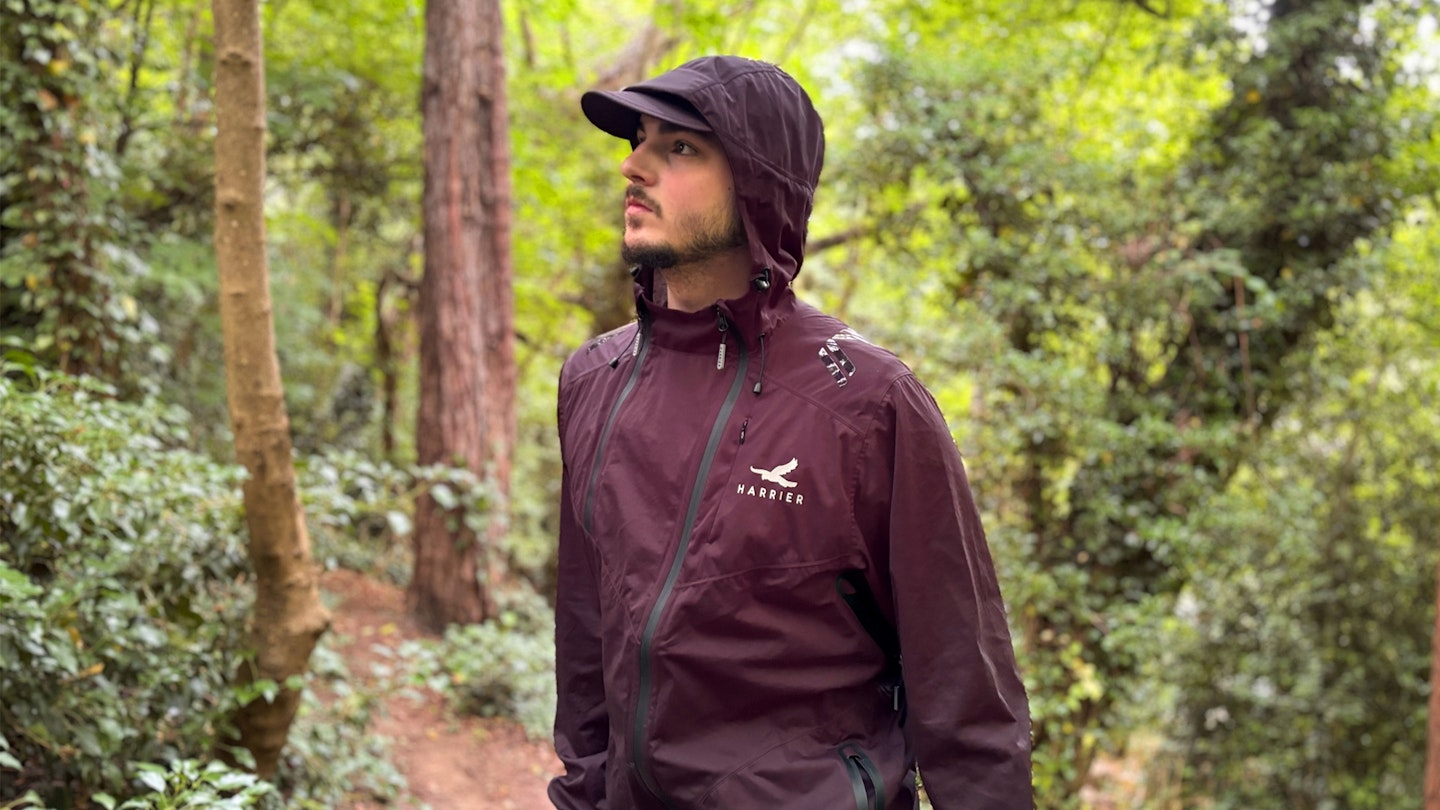
The Harrier Exmoor is a seriously versatile waterproof jacket which really comes to life during all-day endurance training. Weighing in at 340g, it’s not the lightest option around, but that’s offset by the exceptional feature set.
From the pleated back that accommodates a race vest underneath, to dual zips allowing easy access to gear and airflow, it’s clear this jacket is made for serious, all-weather adventures. During our weekend ultras, the Exmoor handled wet and windy conditions with ease, keeping us dry and comfortable.
One standout is the hood, which adjusts securely with three cinch points and a stiff peak that keeps rain out of your face. Plus, it packs a clever roll-down bumbag feature, so you can wear it around your waist when the rain stops. While it doesn’t compress as small as some lightweight jackets, we found this incredibly convenient for changeable weather.
Performance-wise, the Exmoor’s 15,000mm waterproof rating kept us protected during moderate-to-heavy showers, though the fabric did start to feel heavier in prolonged downpours. Ventilation is impressive, with pit zips, front vents, and a snap closure for secure, open wear—all adding flexibility in fluctuating conditions.
We recommend sizing up if you want to add layers underneath, especially if you’re wearing a pack, since the jacket did feel quite snug on our tester. Ultimately, while heavier and a bit bulkier than minimalist alternatives, the Exmoor’s durability, functionality, and sub-£100 price tag make it unbeatable for long, wet trail runs.
Read our full Harrier Exmoor review or find the women’s version here
Pros
- Excellent range of features
- Durable construction
- Pleated back allows for packs to be worn underneath
- Dual zips for customised ventilation
Cons
- A fair bit heavier than other jackets
- If you stash anything in the pockets, they will jangle
| RRP: | £94.99 / $105 |
| Women’s sizes: | XS–XL |
| Men’s sizes: | XS–XXL |
| Waterproofing: | Stretch fabric, 15,000mm |
| Construction: | N/A |
| Weight: | 340g/12oz |
Best for sustainability
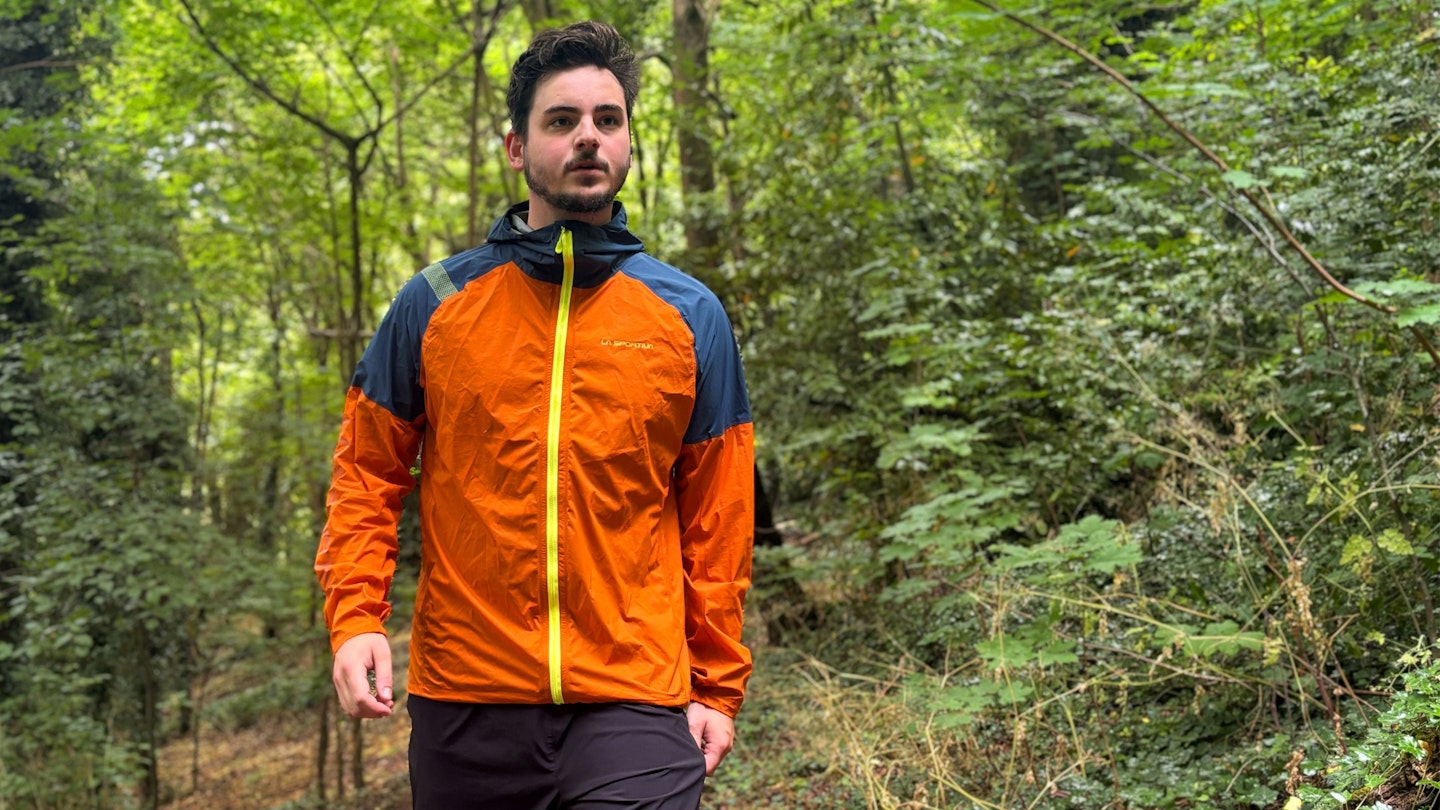
The La Sportiva Pocketshell really impressed us with its eco-friendly design, top-notch ventilation, and solid waterproofing. Built with ultra-marathon runners in mind, this jacket combines durability with a light, compact build that’s perfect for long, wet runs. At 194g, it’s easy to pack down, yet robust enough to handle tough conditions, thanks to reinforced shoulders and a peaked hood that keeps rain out of your eyes.
In our testing on rainy trails, the Pocketshell’s Pertex Shield 2.5-layer fabric held up brilliantly, with rain beading off even in heavy downpours. However, after prolonged exposure, the material did start to saturate. The ventilation system is a standout feature—mesh-lined armpit vents with outer folds kept us cool without letting in water, which felt like a big upgrade from the usual zip vents.
Sustainability is a major plus here too, as La Sportiva used 100% recycled materials for both the outer layer and membrane. This eco-friendly approach sets it apart from other jackets like the Patagonia Storm Racer and The North Face Summit Superior.
A couple of minor trade-offs: the cuffs and hem aren’t adjustable, and we found the jacket better suited to mild weather since it doesn’t offer much warmth on its own. Still, for serious trail runners who value breathability, waterproofing, and eco-conscious design, the Pocketshell is a fantastic investment.
Read our full La Sportiva Pocketshell review or find thewomen’s version here
Pros
- Made with 100% recycled materials
- Durable construction for more longevity
- Smartly designed armpit vents
- Great neck coverage
Cons
- Not as much reflective detailing as we’d like
- Cuffs aren’t adjustable
| RRP: | £167 / $159 |
| Men’s sizes | XS – XL |
| Women’s sizes | XS – XL |
| Waterproofing | 20,000mm HH |
| Construction | Main: 100% Recycled Polyamide. Membrane: 100% Recycled Polyester + Silver Print |
| Weight | 194g / 6.8 oz |
Price: £139.49 (RRP: £160)
A long-time favourite among mountain runners, the Salomon Bonatti Waterproof remains one of the most reliable packable shells out there – and the latest update trims weight while adding welcome extra storage. At just 146g, it’s impressively light and folds into its own chest pocket, yet still shrugs off rain and wind with its 10K/10K AdvancedSkin Dry construction and PFC-free DWR coating.
In testing, we found the new Bonatti every bit as sleek and streamlined as before, with a close, athletic fit that moves cleanly while running. The minimalist design ditches adjustment toggles but holds its shape thanks to partial elastication at the hood, cuffs and hem.
The updated trio of zipped pockets adds real practicality, though we’d avoid stowing anything weighty while moving, lest you incur the dreaded ‘bump-bump-bump’ that plagues all packless runners.
Waterproofing is solid for its weight, with rain beading cleanly off the fabric. Breathability, however, remains its main compromise: on mild or humid runs, it traps heat quickly.
The clever chest press-stud helps vent the jacket without it flapping open, but heavy sweaters may still overheat on long climbs.
It’s not the most advanced shell on the market, yet its balance of durability, fit and packability keeps the Bonatti firmly in cult-classic territory – a dependable backup for mountain marathons or fast, foul-weather training days.
Read our full Salomon Bonatti review or check out the men’s version.
Pros
- Lightweight and packable
- Three waterproof pockets
- Precise, athletic fit without need for adjustment
Cons
- Minimal hood coverage
- Lacks breathability
| RRP: | £160/$180 |
| Breathability: | 10,000g/m2 |
| Weight: | 146g/5.15oz (women’s UK small) |
| Pockets: | 2 side pockets and 1 chest pocket |
| Waterproofing: | DWR treatment (PFC free),10,000 HH |
| Construction: | 100% polyamide |
| Women’s sizes: | XS – XL |
| Men’s sizes: | XS – 2XL |
Price: £139.49 (RRP: £160)
Best women’s running jacket
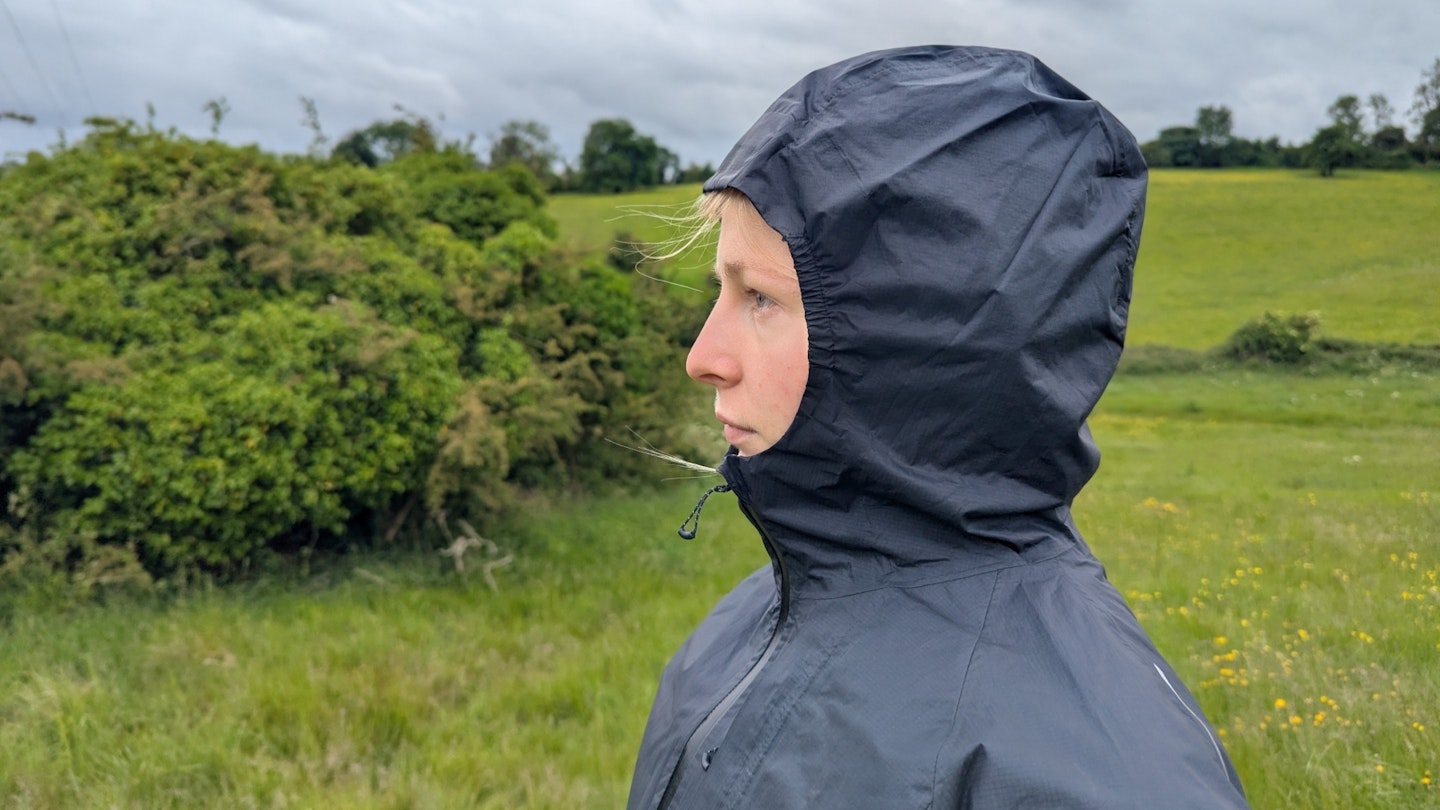
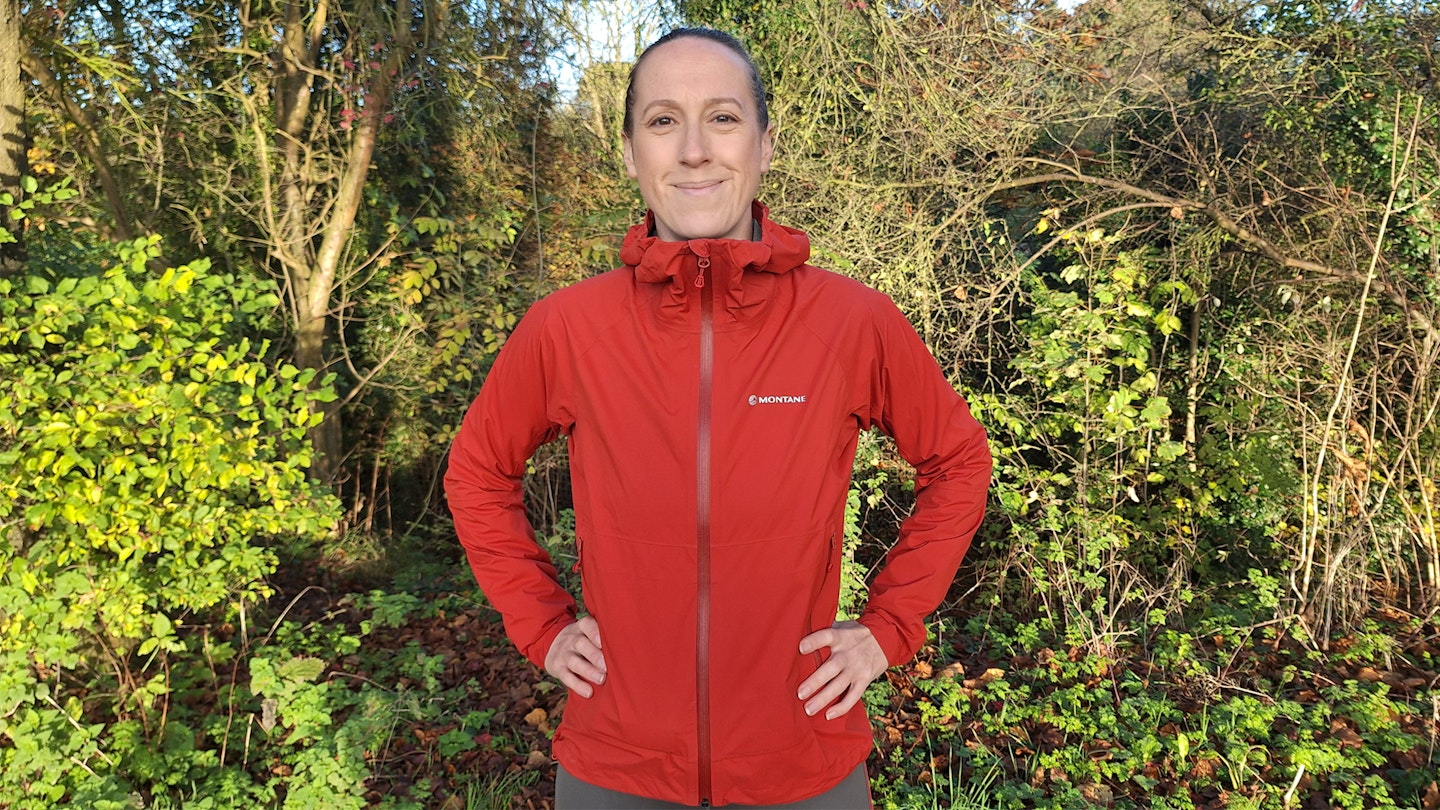
The Montane Minimus Lite balances lightweight design with rugged waterproofing, making it a top choice for trail runners tackling unpredictable weather. Weighing just 215g (women’s size small), it offers a 20,000mm hydrostatic head rating and fully taped seams, effectively shielding you from moderate rain and snow. During testing, it kept tester Lily Canter warm and dry in temperatures below zero with only a single base layer.
Its standout features include a trim, stylish fit, lightweight packability, and an adjustable hood with a stiff peak for clear vision in harsh conditions. The nylon ripstop fabric is durable yet soft, with a stretchy design allowing for unrestricted movement. However, the jacket isn’t flawless—hood drawstrings can flap distractingly, and unzipped sides tend to billow.
Breathability is solid for a waterproof jacket, managing sweat better than cheaper options, though moisture can collect at the seams after extended runs. Sustainability-wise, Montane avoids PFCs, though the use of 100% nylon keeps the eco-rating low.
While pricier than alternatives like the Janji Rainrunner, the Minimus Lite justifies its cost with superior waterproofing, durability, and a flattering, versatile fit that performs as well as it looks. Ideal for those seeking style and substance on wet, rugged trails. A deserving winner in this list.
Read our full Montane Minimus Lite review or find the men’s version here
Pros
- Stylish trim fit
- Warm and flexible
- Solid waterproofing
- Adjustable hood with stiff peak
- Lightweight and packable
Cons
- No option to clip back sides when partially unzipped
- Drawstring hood toggles flap in face
| RRP: | £185 / $235 |
| Women’s sizes: | UK 6 – 16 |
| Men’s sizes: | XS–XXL |
| Waterproofing: | Stretch fabric, 20,000mm |
| Weight: | 215g / 7.6 oz (size 10) |
Best for all-day comfort
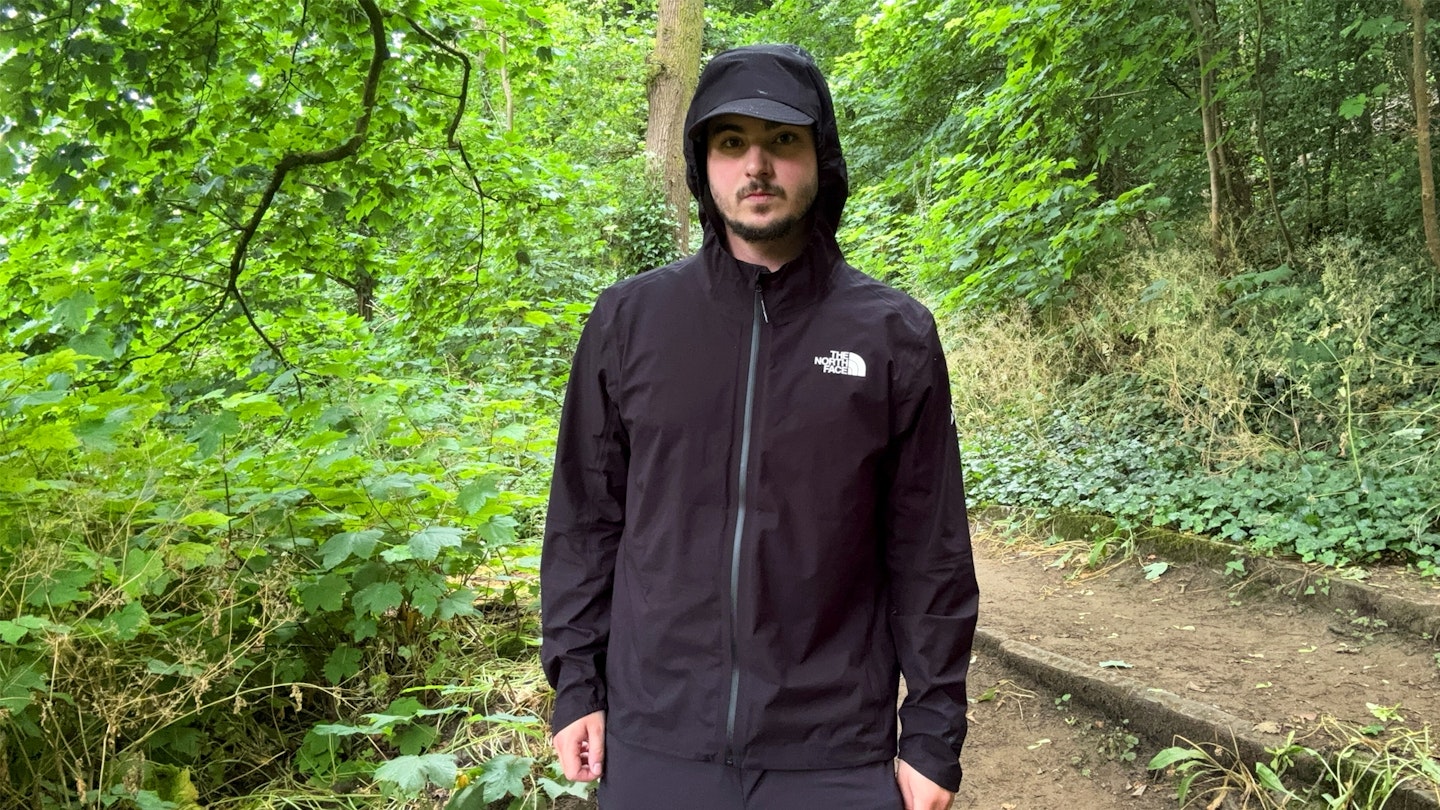
The North Face Summit Superior Futurelight Jacket is a top choice for trail runners prioritising breathability and comfort over full weather protection. We tested it in mixed weather and found it excels in keeping runners cool and comfortable, especially during high-intensity runs.
The Futurelight 3L shell provides good airflow, preventing overheating without compromising on light waterproofing. However, its protection in heavy rain isn’t on par with more robust jackets like the Compressport Thunderstorm.
The 100% nylon material is soft and flexible, allowing for unrestricted movement which is perfect for the arm-flailing fun that comes with technical terrain. The hood cinches tightly, and the internal pocket doubles as a stow pocket, ideal for packing it down when not in use. While the open neckline enhances comfort, it does expose the neck to rain, which can be a drawback in harsher weather.
Sustainability-wise, The North Face uses innovative nano-spinning for the Futurelight fabric, reducing waste. However, it’s not fully recycled, which might deter some eco-conscious buyers.
At £270, it’s a premium option, but for those seeking a jacket designed for high-output activities like alpine trail running, it’s worth the investment. It doesn’t offer full weather protection, but for moderate conditions and those who overheat easily, it’s a solid pick.
Read our full The North Face Summit Superior Futurelight review or find the women’s version here
Pros
- Material is seriously comfortable
- Unrestricted movement in the arms
- Easily adjustable hood
- Comfortable neckline
Cons
- Cuffs can’t be adjusted
- Lower neck line is less protective against rain
| RRP: | £270 / $300 |
| Women’s sizes: | XS–XL |
| Men’s sizes: | S–XL |
| Weight: | 230g/8.11oz (size medium) |
| Waterproofing: | 3 Layer shell with Non-PFC DWR Finish |
| Construction: | 100% recycled polyester |
Best shell
 LFTO
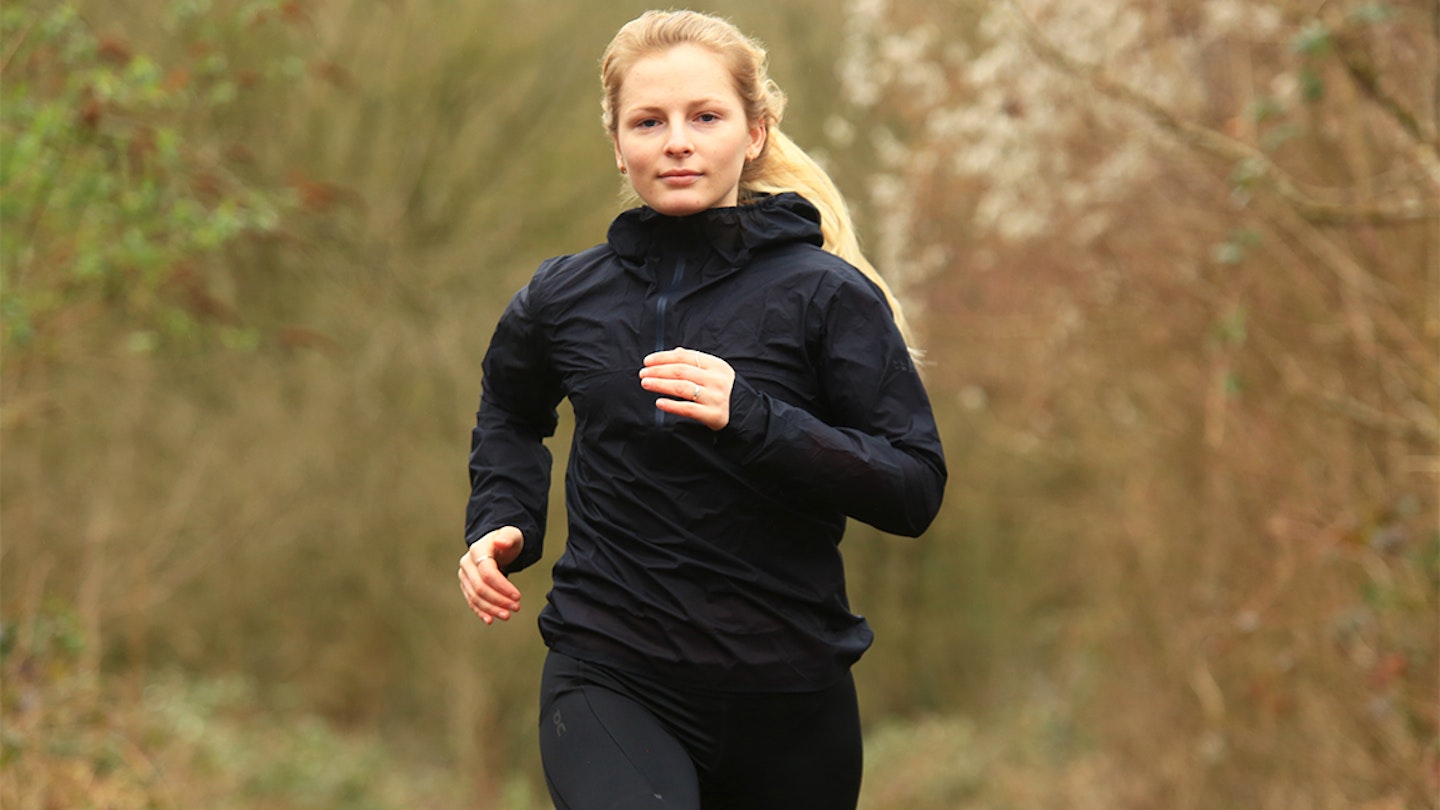
LFTOAt first glance, the Rab Phantom appears pretty simple and straightforward. That’s because it is. But therein lies the beauty of it. At 70g, the Phantom must be the lightest waterproof layer we’ve ever tested, and that’s saying something.
Rab describes it as ‘the ultimate stash-and-forget’ shell and it fills this purpose down to a T, the whole jacket packing neatly into the tiny stuff sack provided, which is so small it’s the size of my palm – and I’ve got small hands.
Material used is 7D Pertex Shield 2.5L which Rab claims has a hydrostatic head rating of 20,000. Showers bead off the fabric pretty well, the waterproofed zip guard and taped seams adding that extra layer of protection. But the Phantom does struggle in the really heavy stuff, in these conditions we’d reach for the OMM Kamelika (see review above) or Inov-8 Stormshell for that extra ounce of protection.
The Phantom is a pull-on style with half zip. A true shell, there’s no pockets on the jacket whatsoever, but this doesn’t make it devoid of run-specific features. The bottom and wrist hems are partly elasticated, which keeps everything in place while leaving room for manoeuvre.
The hood has a ultra-thin wire threaded through the peak it to give some slight structure, while the high neck allows you to zip the coat all the way up to your nose for protection in really foul conditions. When not needed, the hood can be hooked away at the nape, but there’s really no need as there’s no rustle or bounce when running hood-off.
Check out the women’s version here.
Pros
- Extremely lightweight and compact
- Great race-mandated waterproof
Cons
- On the spendier side for a shell
- Can’t cope with heavy downpours
| RRP: | £175/$200 |
| Men’s sizes: | S – XL |
| Women’s sizes: | UK8 – UK16 |
| Waterproofing: | Pertex Shield, 20,000 HH |
| Construction: | 2.5-layer |
| Weight: | 70g/2.47oz |
 LFTO
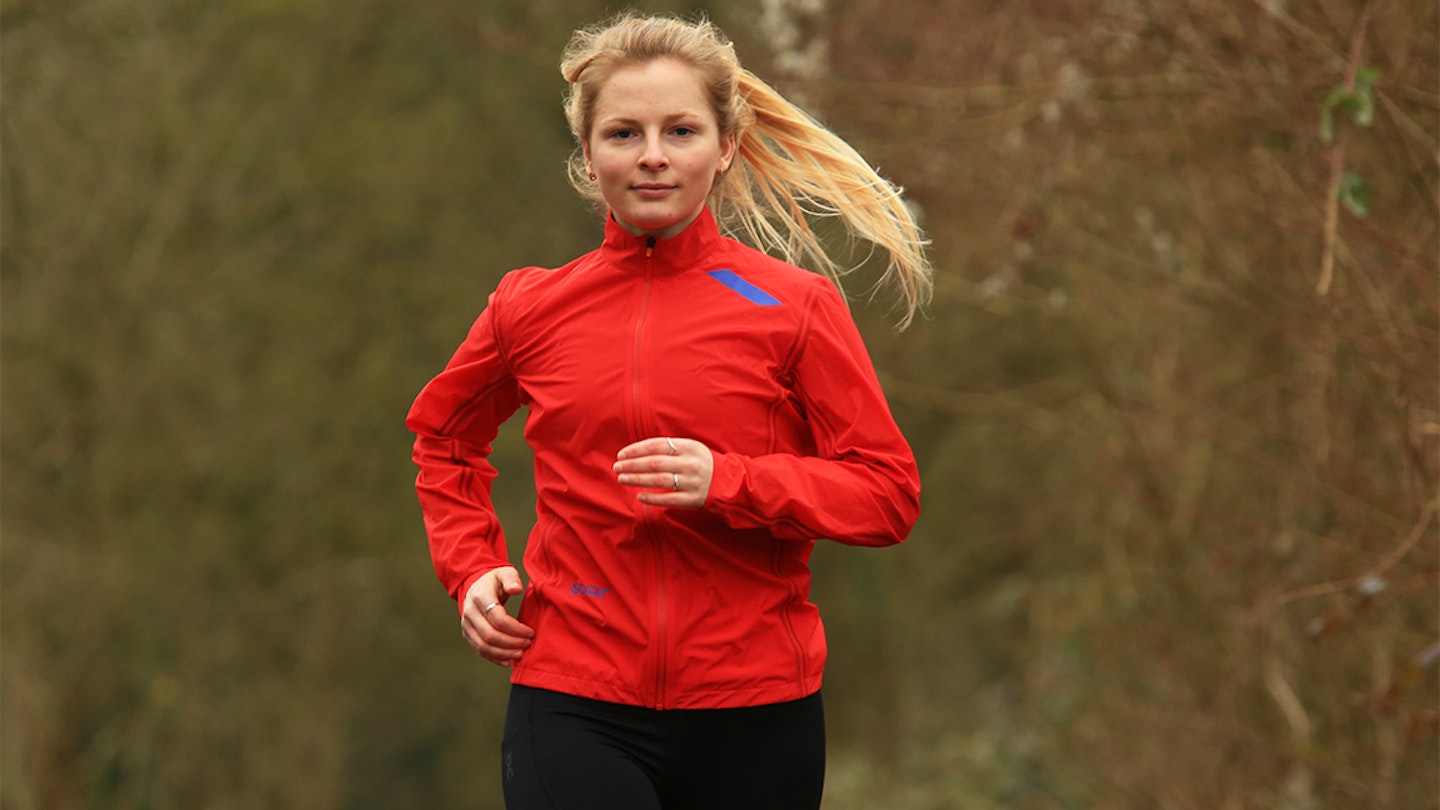
LFTOWhen you first get your hands on the Soar Ultra Jacket, you can instantly tell that it’s made to be a seriously piece of running kit. The Ultra is designed to be a high-performing and technical waterproof running jacket. In the Ultra, Soar has developed their own membrane-free, waterproof fabric dubbed Rainout, which makes for a lightweight (144g) and breathable jacket that’s still superbly protective in showers.
The woven knit fabric is created via a heat-shrinking process, which creates a dense weave. A Durable Water Repellent (DWR) coating is applied before and after this process, which Soar says results in the Ultra being both windproof and waterproof. Visible taped seams add to the waterproofing, as well as being a unique style feature.
A four-panel construction wraps the jacket round the body to create a slightly tailored fit, with partly elasticated wrists and a drawstring hem doing a good job of keeping the jacket in place. The jacket’s true to size, with a size S fitting as a UK8, while still allowing for room inside for movement and extra layers.
For such a waterproof and structured jacket, I’m impressed by the incredible flexibility and stretch in the lightweight material. Which does a good job at warding off rain for runs of up to an hour, while still managing to remain fairly breathable – an elusive combination in a rain jacket! Note though that there’s no hood, so if you like to run hood up in the rain, then take a look at our other waterproof jacket reviews.
Unusually, the Ultra has one pocket that’s located at the lower back. It’s easy to access on the go, so no qualms there, and has a large capacity with plenty of room for a phone, gels, keys and change.
Pros
- Technical features
- Good waterproofing
- Refelctive detailing
Cons
- Large price-tag
- Only one pocket
| RRP: | £190/220 |
| Men’s sizes: | XS – XXL |
| Women’s sizes: | XS – XXL |
| Waterproofing: | Rainout fabric |
| Construction: | 2-layer |
| Weight: | 144g/5.08oz |
The Asics Fujitrail Elite is a highly adjustable, breathable running jacket designed to keep you comfortable on intense trail runs. We took it out in wet conditions over a 20km trail and found it excelled in ventilation and comfort, thanks to the Pertex Shield 2.5-layer fabric. This lightweight material offers a solid 20K/20K waterproof rating—perfect for moderate rain, though it can start to saturate in heavy downpours.
What sets the Fujitrail apart is its fit and adjustability. With a triple-adjustment hood, adjustable hem, and thumb loops, it moulds to your shape and holds firmly in place, ideal for technical terrain and long distances. The soft, malleable fabric also makes it feel less like a waterproof shell and more like a second skin, allowing for free movement without the stiffness found in many other jackets.
On the downside, it lacks ample reflective detailing, and the cut can feel boxy until adjusted. At £187, it’s a premium option, but discounts are available as newer models arrive. For runners prioritising airflow over full waterproofing, the Fujitrail is an exceptional pick; however, those seeking ultimate rain protection might look at alternatives like the Inov-8 Stormshell V2.
In all, this is a top choice for trail runners wanting a versatile, breathable layer, particularly for high-output runs in changing conditions.
Read our Asics Fujitrail Elite review or find the women’s version here
Pros
- Highly adjustable fit
- Thumb loops are more comfortable than other jackets
- Exceptionally breathable with lots of ventilation
Cons
- Not much reflective detailing
- Can take some fiddling to get the fit just right
| RRP: | £187 / $215 |
| Women’s sizes: | XS–XL |
| Men’s sizes: | S–XL |
| Waterproofing: | Pertex 2.5 layer (20,000 HH) |
| Construction: | 100% nylon |
| Weight: | 161g / 5.7 oz (size medium) |
 LFTO
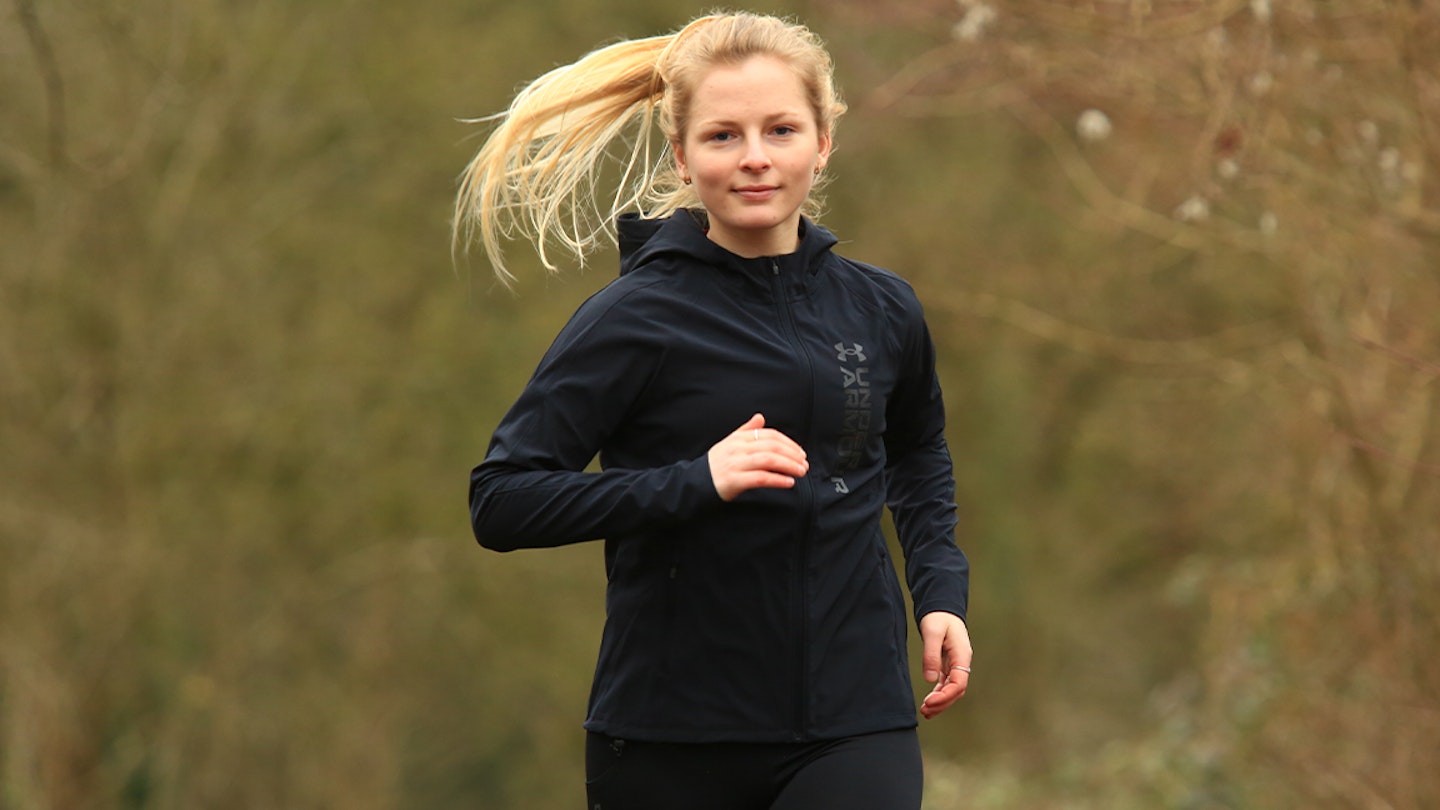
LFTOThis suave and streamlined number from Under Armour (UA) is a comfy and practical everyday sports jacket with a peppering of run-specific features. As the name suggests, this jacket is designed to outrun the storm, not to weather it. Translated, this equals a combination of features to boost comfort – four-way stretch and lightweight construction – with ample breathability provided from the vents along the back and woven fabric.
Though the jacket is not fully waterproof, it aims to be water-repellent and was fairly protective in brief and light showers. This is partly due to the wind-resistant material and solid build. However, it doesn’t manage against heavy or sustained rain, so would be best suited to a cloudy day when showers are only a possibility.
UA describe the OutRun jacket as having a streamlined fit, which feels pretty accurate. There’s enough room for a running t-shirt and base layer underneath, and a drawstring waist offers a choice of fit, allowing for full range of movement when running.
The bungee adjustment on the hood is so subtle, we almost missed it, but it emulates the thoughtful details strewn throughout. These include the two hand-sized pocket at the front, one with an inner mesh compartment the ideal size for keys, and the smattering of reflective detailing on the front and back.
Check out the men’s version here
Pros
- Affordable
- Stylish
- Range of uses
Cons
- Not fully waterproof (doesn’t claim to be)
| RRP: | £85/$100 |
| Weight: | 310g/10.95oz |
| Waterproof: | Water-resistant |
| Construction: | 87% Polyester / 13% Elastane |
| Women’s sizes: | XS – XL |
| Men’s sizes: | S – XXXL |
Get discounts from Run 1000 Miles!

A lot of the jackets we recommend above are available, usually at a great price, on Sportsshoes. So remember, if anything catches your eye, you can save 15% on trail running gear by signing up to our Run 1000 Miles Challenge. Get your bespoke discount code here and enjoy the savings at Sportsshoes.com!
What to look for in a waterproof running jacket
Waterproofing
Jackets will come in varying levels of waterproofing, which is measured by their hydrostatic head (HH) rating. Premium-end gear has a 20,000mm HH or higher, which means a 20m column of water can stand on the fabric before water penetrates it. The minimum you would want for a rain jacket is 10,000mm HH.
What is hydrostatic head?
The hydrostatic head (HH) of a material is the height at which a column of water must be held against a fabric, before the build-up of pressure that’s created causes the water to start penetrating the material. These days, the test is carried out using a water pressure machine which can replicate the downward pressure created by such a column. Typically, the tighter the denier weave of the fabric, the less moisture that’s let through.
In the UK, companies are allowed to claim that a garment is waterproof if it has a HH of at least 1500mm. However, we’d recommend you reach for a waterproof jacket with a HH rating of at least 10,000mm, if not 15,000mm. A high HH would be 30,000mm, which means that the fabric let through water only once the column of water pressure reached 30m high. In other words, this fabric has a high level of waterproofing.
Seams
For a garment to be fully waterproof, its seams must be properly sealed so no water can penetrate to the layers below. This means that the seams must be reinforced to keep the rain out, this can be from taping to cover up the tiny holes left in the material from stitching, or welding the seams which should create both a watertight and airtight seal.
Breathability
Waterproof jackets struggle to be breathable as waterproofing creates a seal against the elements, which can also reduce airflow as well as water ingress. Look out for features like breathable materials, vents which can be opened during a break in the clouds, and thinner materials which will be more breathable than layers with thick waterproof membranes.
Hood
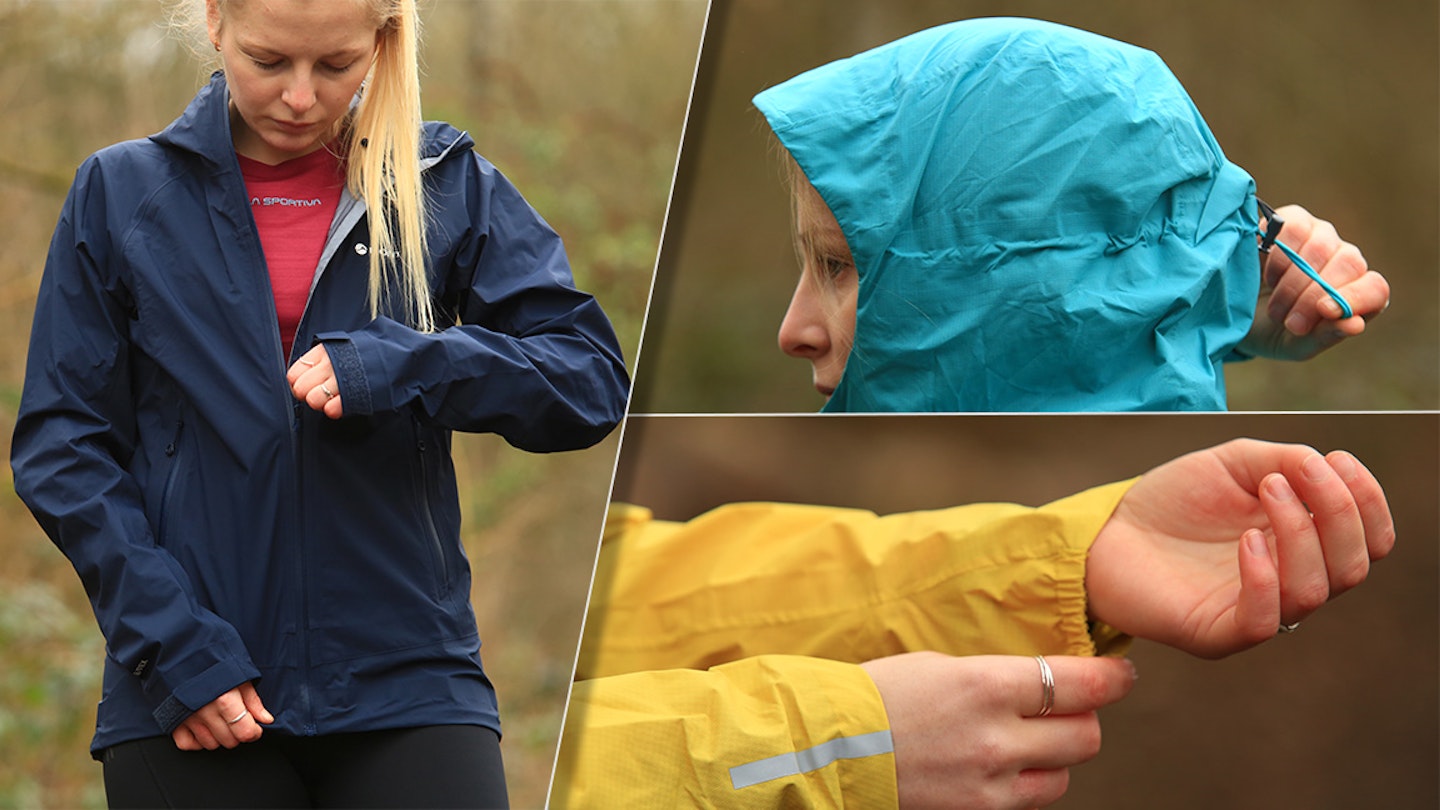
Some runners don’t like running with a hood, if you like the coverage though, a well-structured hood will keep you even more dry on a rainy run. Look out for internal wiring and structure to the tip of the hood to keep rain off your face, plus adjustability with drawstrings on the side along with a snug fit to keep the hood in place.
Cuffs and zips
Look for jackets with some form of closure along the cuffs to keep the rain out. This could be with a drawstring, elasticated hem, or cuff that keeps the end of the sleeve tight to the wrist.
A zip is a point of weakness in a waterproof garment as this is an area where rain could seep through. A waterproof jacket should have reinforcement along the zip, which could be in the form of a waterproof coating, or a long zip baffle to provide an extra layer between yourself and the zip.
Visibility
It’s likely that with rain will come conditions of low visibility. Grey and dim cloudy skies will make you far less visible to traffic and other runners, so having a jacket with some touches to boost visibility is always a plus in our books. This could mean a completely fluorescent colourway or be in the form of more subtle reflective details.
FAQs

©LFTO
What’s the difference between waterproof and water-resistant?
Water-resistant jackets are designed to fend off light showers, but will eventually soak through during prolonged rain. Waterproof jackets, by contrast, have sealed seams, water-repellent zips, and a high hydrostatic head rating – offering complete protection from sustained downpours.
How do I know if a jacket is breathable enough for running?
Check for technical fabrics that combine a waterproof membrane with moisture-wicking inner layers. Look out for ventilation features such as pit zips or perforated panels, and consider how thick the fabric feels – ultralight shells tend to release heat more easily than heavyweight options.
Do lightweight jackets compromise durability?
Generally, yes. The thinner the fabric, the more vulnerable it is to abrasion from pack straps or brambles. However, many high-end models now use ripstop or reinforced panels in key areas to balance minimal weight with long-term toughness.
How should I care for and wash my waterproof running jacket?
Use a technical cleaner such as Nikwax or Grangers, and avoid standard detergents or fabric softeners, which can strip the durable water repellent (DWR) coating. Zip up all pockets and fasten Velcro tabs before washing, then hang dry rather than tumble dry.
When and how often should I reproof the jacket?
If water stops beading on the surface and begins to soak in, it’s time to reproof. You can use a spray-on or wash-in treatment to restore the DWR coating – usually every 6 to 12 months depending on use and washing frequency.
Can I use a running jacket for other activities?
Absolutely. Lightweight waterproofs double up nicely for hiking, commuting, or travel. Just bear in mind that running jackets prioritise breathability and freedom of movement over insulation or heavy-duty abrasion resistance.
Along with your waterproof jacket, you’ll want to consider levelling-up to some waterproof trail running shoes to keep you feet as bone dry as your top half while you run.
About the authors
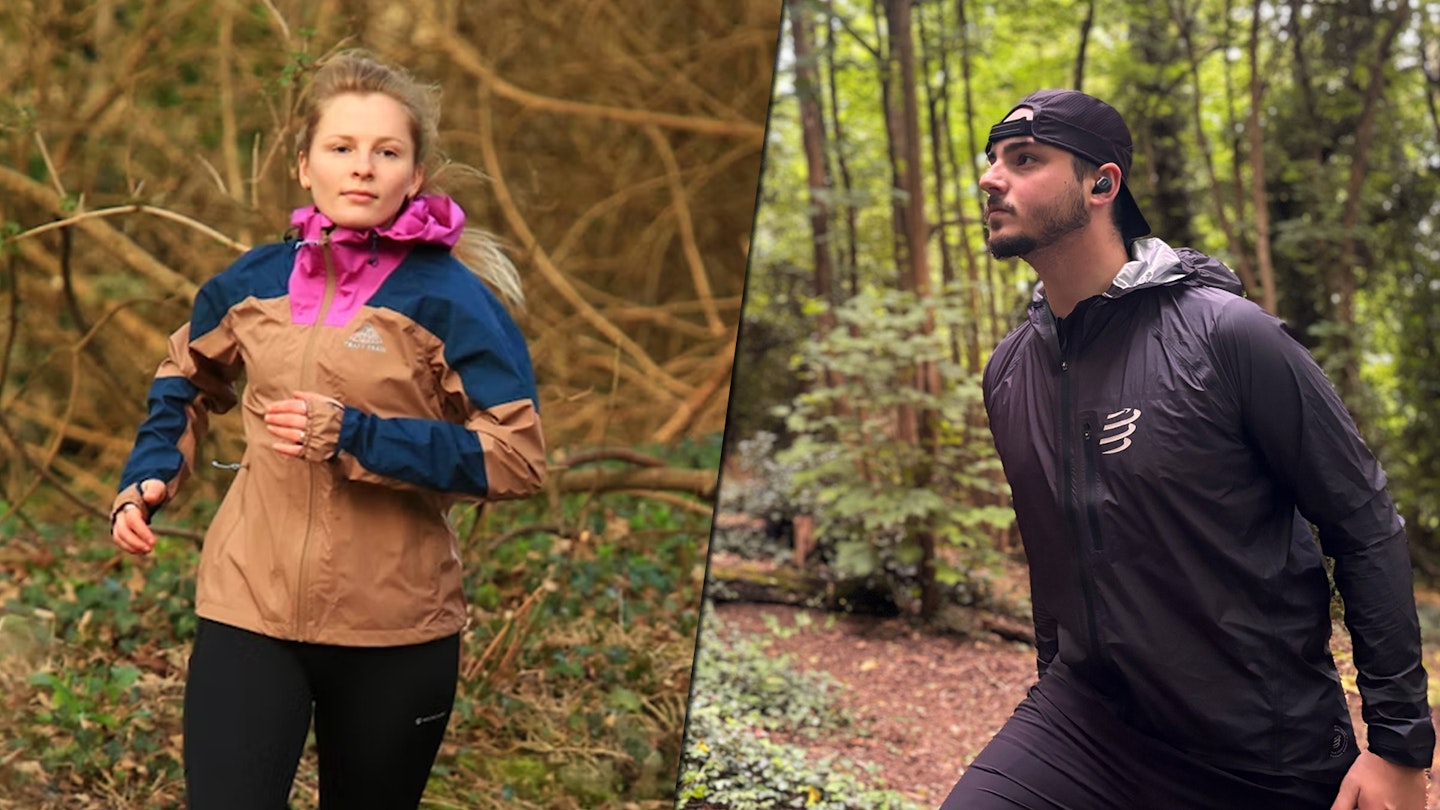
This group test covers the best waterproof running jackets for men and women. As such, we’ve used two testers.
©LFTO
Milo Wilson is our current trail running guru and is the world’s fussiest jacket reviewer. He runs hot, hates sticky membranes, and refuses to look stupid. This means his criteria for a good running jacket is wildly harsh – but it also means that any jacket on this his is guaranteed to be extremely breathable and have a great fit.
Kate Milsom specialises in trail running content. In her career as a sports journalist, Kate has worked with industry-leading titles including 220 Triathlon, Cycling Plus, Road.cc and Cyclist. Prior to this, Kate studied English Literature and French at university, then got the outdoors bug and never looked back.
link